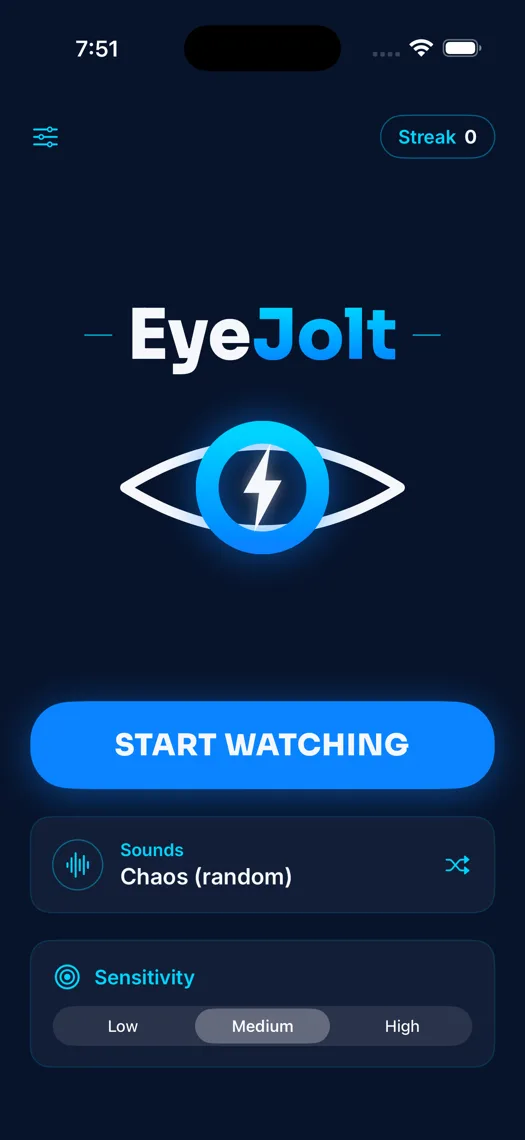
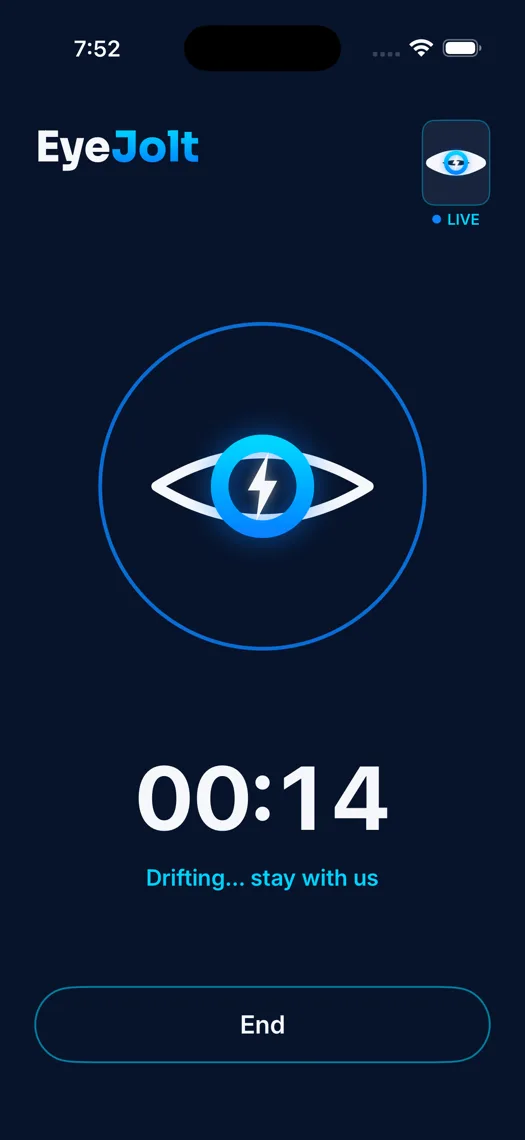
Late-night reading, exam prep, lectures, assignments, and online courses.
Built for the moments people actually fade.
EyeJolt is broader than a single driving alarm. It is an alertness companion for any session where closing your eyes at the wrong moment matters.
Remote work, programming, writing, meetings, admin, and afternoon crashes.
Security, hospital work, control rooms, warehouses, rail, mining, and emergency roles.
Warning signs, safer choices, and a clear rule: feeling drowsy means stopping somewhere safe to rest.
Early prayer, scripture reading, night devotion, and long services with gentle-to-firm alerts.
Compliance, certifications, professional development, language learning, and webinars.
Temporary vigilance while feeding a newborn, sitting with family, or watching overnight.
Session summaries help reveal fatigue patterns and the times you are most likely to drift.
The alarm is the product.
A repeated beep becomes invisible. EyeJolt keeps the jolt surprising with a curated sound library, randomization, and custom recordings.
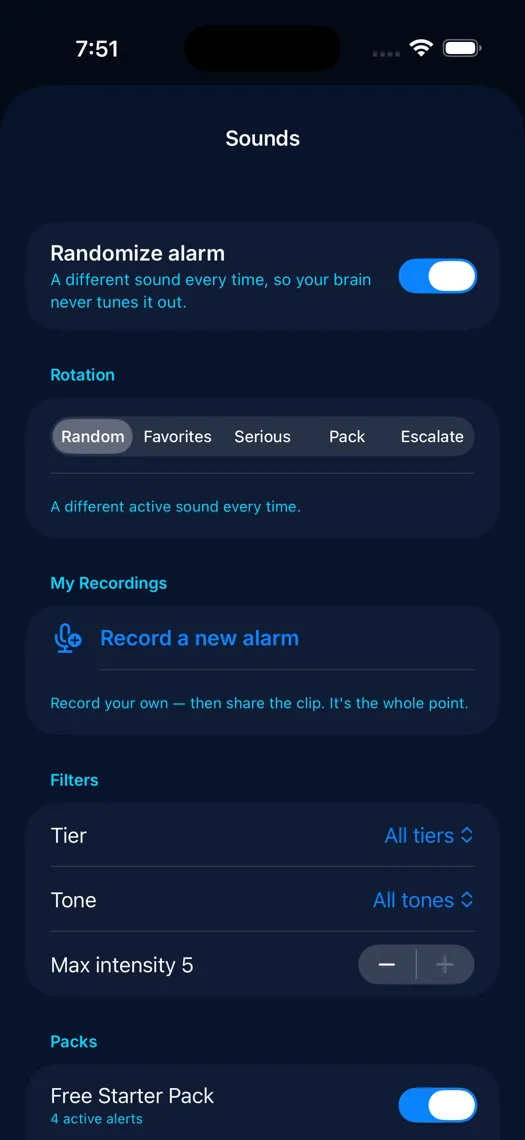
Rotate through serious tones, character alerts, absurd sounds, and high-intensity jolts so your brain cannot get used to one alarm.
Create personal alarms from your own voice or a friend’s voice and add them to the rotation.
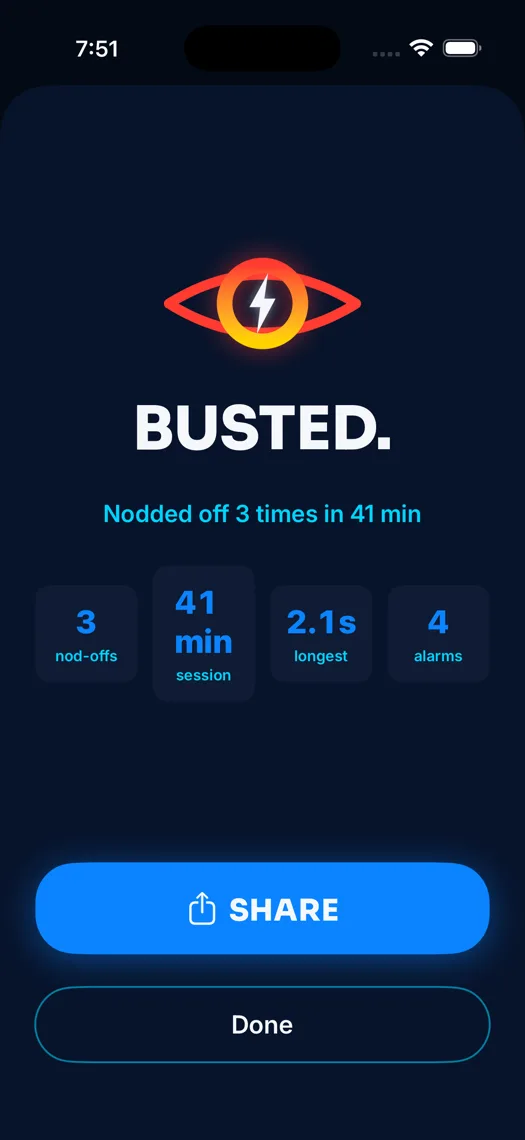
See how many times you drifted, which sounds fired, and how long your session lasted.
On Mac, EyeJolt keeps watching while you work in other apps and brings itself forward when an alarm fires.
Download EyeJolt.
The mobile apps are built for iOS and Android. Desktop support for macOS and Windows is on the way — check back soon.
Desktop
A native macOS build is in preparation and will be available to download here soon. Windows desktop support is in progress.
EyeJolt is a wake-up aid, not a guarantee.
Platform status
iOSBuilt
AndroidBuilt
macOSComing soon
WindowsIn progress
Private by design.
EyeJolt’s strongest promise is simple: the camera is a live sensor, not a recording device.
Eye closure and face signals are processed locally. Camera frames are not uploaded to EyeJolt.
No face video, photos, or camera frames are stored by the app as part of monitoring.
EyeJolt can help alert you to drowsiness, but it does not replace rest, safe driving choices, medical advice, or workplace safety systems.
Understand the fade.
Source-backed guides, practical planning tools, transparent comparisons, and honest answers about what alertness technology can and cannot do.
Symptoms, causes, safety risks, and when repeated daytime sleepiness needs medical advice.
Warning signs, prevention, night driving, and the non-negotiable decision to stop and rest.
Fatigue checks, break planning, night-shift planning, and a private camera-position preview.
Source-led guides for Australia, the United States, and the United Kingdom.
How eye-closure signals, local processing, sensitivity, and platform adapters work.
Fair frameworks for evaluating fatigue apps, stay-awake tools, and vehicle monitoring.
Background monitoring, alarms, glasses, privacy, supported platforms, and safety limits.
Our sources, correction process, review boundaries, and approach to medical and safety content.